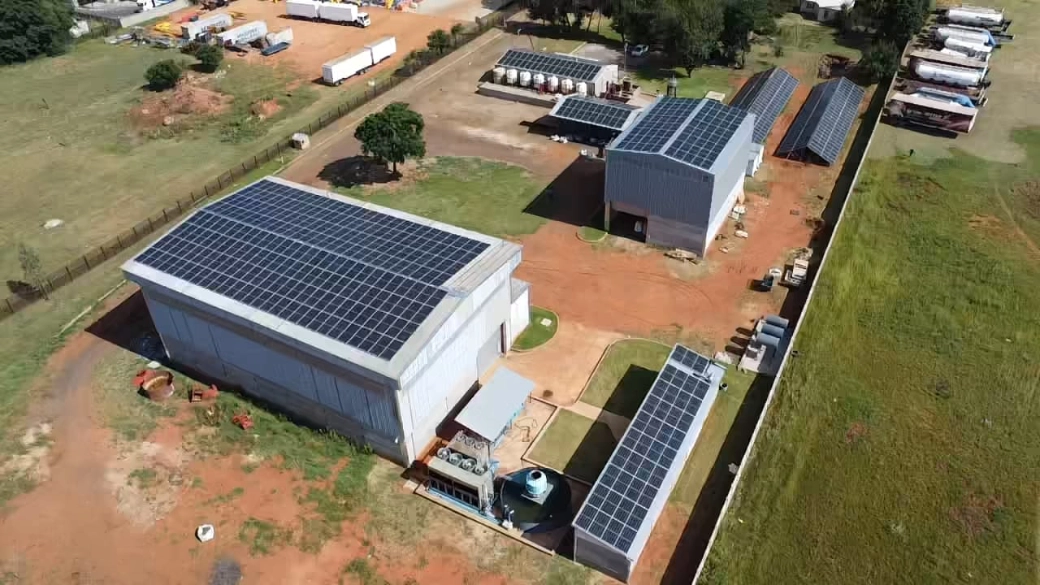
Saftronics successfully supplied and installed a 600kW grid-tied solar power system at a metal processing and foundry facility in Meyerton, South Africa. The system was designed to reduce the plant’s reliance on grid electricity while lowering operating costs through the use of clean, renewable solar energy.
The installation combines 500kW of grid-tied inverter capacity with a 100kW hybrid inverter, providing a flexible energy solution that maximizes solar generation while incorporating battery storage for enhanced energy management. A 365kWp photovoltaic (PV) array, consisting of 653 × 560W Bluesun solar panels, supplies renewable energy to the facility, while a 100kWh lithium battery system provides energy storage to improve system resilience and optimize self-consumption.
The solution features five 100kW Bluesun grid-tied inverters, one 100kW Bluesun hybrid inverter, and 20 high-voltage 5kWh Bluesun lithium batteries, all integrated into a single intelligent energy management system. This configuration enables the facility to maximize the use of solar power during the day while providing additional flexibility through battery-assisted operation.
From design and equipment supply to installation and commissioning, Saftronics delivered a complete turnkey solar solution tailored to the customer’s operational requirements, helping improve energy efficiency while supporting a more sustainable manufacturing process.
Saftronics successfully supplied and installed a 600kW grid-tied solar power system at a metal processing and foundry facility in Meyerton, South Africa. The system was designed to reduce the plant’s reliance on grid electricity while lowering operating costs through the use of clean, renewable solar energy.
The installation combines 500kW of grid-tied inverter capacity with a 100kW hybrid inverter, providing a flexible energy solution that maximizes solar generation while incorporating battery storage for enhanced energy management. A 365kWp photovoltaic (PV) array, consisting of 653 × 560W Bluesun solar panels, supplies renewable energy to the facility, while a 100kWh lithium battery system provides energy storage to improve system resilience and optimize self-consumption.